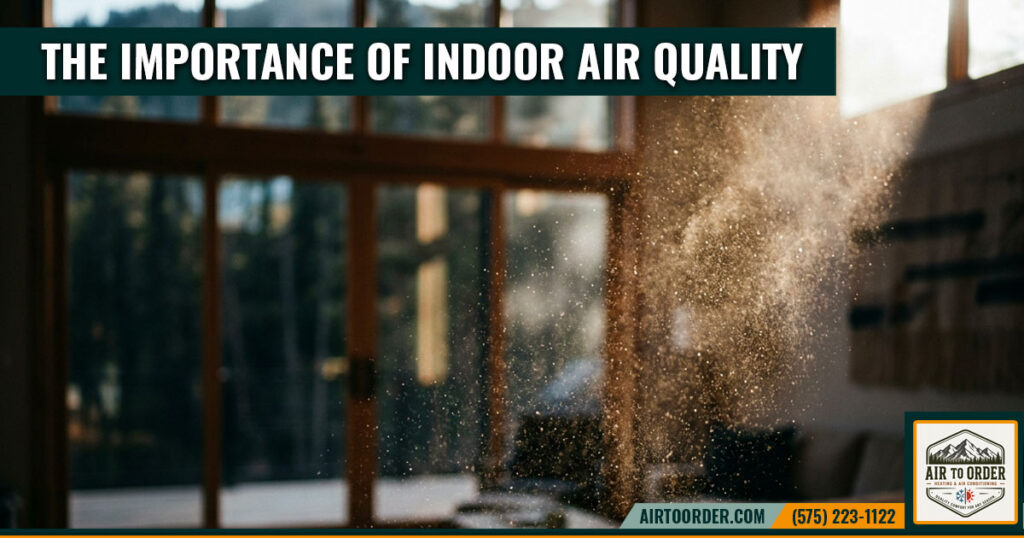
Living at 8,000 to 10,000 feet, you already know the mountain air outside is thin, dry, and clean. What most homeowners don’t realize is that the air inside their home behaves very differently. It often needs far more help than it would at sea level.
Indoor air quality is one of the most overlooked parts of a healthy, comfortable home, especially up here. Here’s why it matters so much at elevation, and what you can do about it.
What Is Indoor Air Quality?
Indoor air quality refers to the condition of the air inside your home: its cleanliness, humidity level, and how freely it circulates. It affects everything from allergies and respiratory health to how well your wood floors, furniture, and even your HVAC equipment hold up over time.
At elevation, indoor air quality isn’t a background concern. It’s central to how your whole house performs.
Why High Altitude Changes the Equation
1. The Air Is Naturally Drier
At 8,000–10,000 feet, atmospheric pressure is lower and humidity levels drop significantly compared to lower elevations. Once that dry outdoor air infiltrates your home and gets heated through a New Mexico winter, indoor humidity can fall even further, often into the single digits. That leads to:
- Dry, cracked skin and irritated sinuses
- Increased static electricity
- Cracking wood trim, flooring, and furniture
- Higher susceptibility to airborne viruses, which spread more easily in low-humidity air
2. Homes Are Built Tighter for Mountain Winters
Homes in Angel Fire, Taos, Mora, Cimarron, and the surrounding area are typically built tight and well-insulated to handle brutal winter temperatures and heavy snow loads. That’s great for efficiency, but it also means less natural air exchange with the outdoors. Without deliberate ventilation, indoor pollutants (dust, wood smoke residue, pet dander, VOCs from paint and furnishings) build up and simply have nowhere to go.
3. Wood-Burning and Combustion Appliances Are Common
Many high-country homes rely on wood stoves, fireplaces, or propane heat as a primary or backup heat source. These add particulate matter and combustion byproducts to indoor air if not properly vented and maintained, making filtration and fresh-air exchange even more important.
4. Thinner Air Means Your Lungs (and Your Equipment) Work Harder
Lower oxygen levels at elevation already put extra demand on your respiratory system. Poor indoor air quality compounds that stress, particularly for kids, older adults, and anyone with asthma or allergies. It’s also part of why HVAC systems at high altitude need more frequent service than they would at sea level.
HVAC’s Role in Indoor Air Quality
Your HVAC system isn’t just for heating and cooling. It’s the primary tool for managing what’s actually in the air you breathe, and it’s the core of our air quality services. Three components do the heavy lifting:
Filtration A properly sized, high-quality filter (and where appropriate, a whole-home air purifier or media filtration system) captures dust, pollen, wildfire smoke particles, and allergens before they recirculate through your home. At altitude, where wildfire smoke can drift in from regional fires during dry summer months, good filtration matters even more.
Humidity Control Whole-home humidifiers are one of the highest-impact upgrades for mountain homes. Adding moisture back into your heated indoor air protects your health, your home’s woodwork, and even your HVAC system’s electronics and seals, which can degrade faster in overly dry conditions.
Ventilation Controlled mechanical ventilation, like an energy recovery ventilator (ERV) or heat recovery ventilator (HRV), brings in fresh outdoor air without sacrificing the energy efficiency your tight, well-insulated home depends on. This is especially valuable in homes with wood stoves, attached garages, or minimal natural drafts.
Signs Your Indoor Air Quality Needs Attention
- Persistent dry skin, bloody noses, or scratchy throats in winter
- Visible dust buildup soon after cleaning
- Musty odors or visible condensation on windows
- Worsening allergy or asthma symptoms indoors
- Wood floors, trim, or furniture cracking or gapping seasonally
If any of these sound familiar, it’s worth having your system evaluated. It’s also worth checking whether your HVAC system needs repair more broadly.
Let’s Get Your Air Right
Air to Order LLC is a veteran-owned, family-operated HVAC company based in Angel Fire, serving Angel Fire, Taos, Mora, Cimarron, and the surrounding area. We understand what 8,000–10,000 feet does to a home’s air, because we live and work in it every day.
Whether you need a humidifier added to your system, better filtration, or a full ventilation assessment, we’re here to help you breathe easier at altitude.
📞 Call (575) 223-1122 or book a service call today.