At 8,000 to 10,000 feet, your HVAC system doesn’t get an easy season off. Long, cold winters mean the heating side runs hard for months at a time, and that kind of sustained workload wears on equipment faster than milder climates do. Catching problems early is the difference between a simple repair and a full breakdown in the middle of a January cold snap. Here’s what to watch for.
Unusual Noises
A healthy system runs with a steady, low hum. Banging, grinding, squealing, or rattling noises usually mean something mechanical has come loose, worn out, or is rubbing where it shouldn’t be. A loud clicking on startup or shutdown can point to an electrical component starting to fail. None of these noises get better on their own, and most get more expensive the longer they’re ignored.
Weak or Uneven Airflow
If some rooms feel noticeably warmer or colder than others, or airflow from the vents feels weaker than it used to, that’s often a sign of a struggling blower motor, a clogged filter, or ductwork losing air before it reaches the room. In older mountain homes with ductwork run through unconditioned crawlspaces or attics, uneven airflow is especially common and worth having checked before it turns into a bigger comfort or efficiency problem.
Rising Energy Bills Without Explanation
When a system starts losing efficiency, it has to run longer and work harder to hit the same temperature. That usually shows up on the utility bill before it shows up as an obvious symptom in the house. If your propane or electric costs are climbing without a change in usage or a particularly extreme stretch of weather, it’s worth having the system looked at rather than assuming it’s just a cold month.
Frequent Cycling
A system that turns on and off more often than it used to, or runs in short bursts instead of steady cycles, is short-cycling. This can point to a system that’s undersized, oversized, low on refrigerant, or dealing with a failing component. Short-cycling wastes energy and puts extra wear on the equipment every time it starts back up, so it’s worth diagnosing rather than living with.
System Runs Constantly Without Reaching Temperature
The opposite problem is just as telling. If your system runs almost nonstop but the house never quite hits the temperature you set, something is preventing it from keeping up: low refrigerant, a failing compressor, a system that was undersized for the home, or ductwork losing too much conditioned air along the way. A system working overtime and still falling short is one of the clearest signs something needs attention.
Thermostat Problems
Sometimes the issue isn’t the furnace or heat pump at all, it’s the thermostat. A thermostat that’s unresponsive, shows a temperature that doesn’t match how the house actually feels, or fails to keep the system on a consistent schedule can throw off comfort and efficiency just as much as a mechanical failure. It’s a simpler fix than most HVAC issues, but it still needs to be diagnosed rather than assumed.
Excess Frost or Ice Buildup
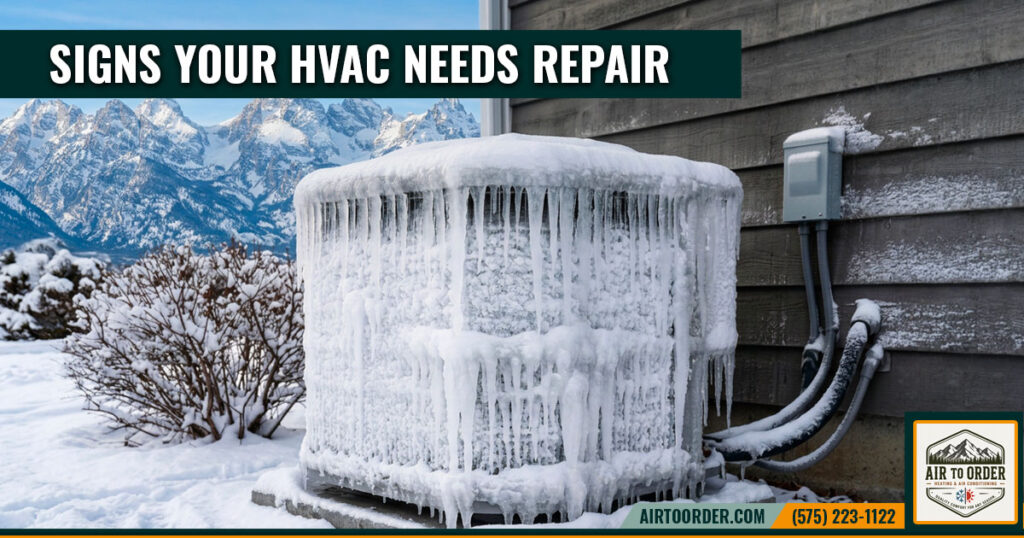
Some frost on an outdoor heat pump unit during cold weather is completely normal. The system is designed to build a light layer of frost, then automatically enter a defrost cycle to melt it away before it becomes a problem. What isn’t normal is heavy ice or thick frost that doesn’t clear between defrost cycles, or ice that keeps building up over hours or days. That usually points to a defrost control issue, a refrigerant problem, or restricted airflow across the coil, and it’s a sign to call a professional rather than wait it out. Left alone, heavy ice buildup reduces efficiency and can lead to real damage to the coil and compressor over time.
A Dirty or Blocked Outdoor Unit
Outdoor condenser and heat pump units need airflow through the coil to work properly, and that coil is exposed to everything the outdoors throws at it: dirt, mulch, leaves, pollen, and debris. Over time, that buildup can mat against the fins and choke off airflow almost completely. A unit that’s visibly caked in dirt or debris isn’t just an eyesore. It’s forcing the system to work harder to move the same amount of air, which drives up energy use and shortens the equipment’s life. Keeping the area around the unit clear and having the coil cleaned periodically is one of the simplest ways to avoid a repair call altogether.
Water Leaks or Unexplained Moisture
Puddling water near an indoor unit or a musty smell near the vents can point to a clogged condensate drain line, a cracked drain pan, or in some cases a refrigerant leak causing excess condensation. Any of these can lead to water damage or mold growth if left unaddressed, so a leak is worth a same-week call rather than a “we’ll get to it” item on the list.
Strange Smells
A burning smell can mean an electrical issue or dust burning off a component that’s overheating. A musty or moldy smell often points to moisture sitting somewhere it shouldn’t, whether in the ductwork, the drain pan, or the coil itself. Either one is worth investigating right away rather than just running the fan and hoping it clears.
Signs of a Combustion Problem in Propane or Gas Furnaces
For homes running a propane or gas furnace, a few specific signs matter more than the rest. A pilot light or burner flame that looks yellow or flickering instead of steady blue can indicate incomplete combustion. Soot near the furnace, unusual condensation, or a carbon monoxide detector sounding are not wait-and-see situations. These point to a potential safety issue and call for shutting the system down and getting a technician out right away, not scheduling it for later in the week.
System Age
Even a well-maintained furnace or heat pump has a lifespan, typically somewhere in the 12 to 20 year range depending on the equipment and how hard it’s been run. An older system that needs more frequent repairs, especially at high elevation where equipment already works harder than it would at sea level, may be reaching the point where replacement makes more financial sense than continuing to patch it.
When to Call
Any one of these signs on its own might not be urgent, but they rarely show up alone for long. Catching them early usually means a straightforward repair. Waiting typically means a bigger job, a higher bill, or a system that fails on the coldest night of the year instead of on your schedule.
Noticing any of these signs? Air to Order is a veteran-owned, family-operated HVAC company based in Angel Fire, serving Taos, Mora, Cimarron, and the surrounding mountain communities. We’ll diagnose the issue honestly and tell you straight whether it’s a repair or time to start thinking about replacement.
📞 Call (575) 223-1122 or schedule a service call to get started.