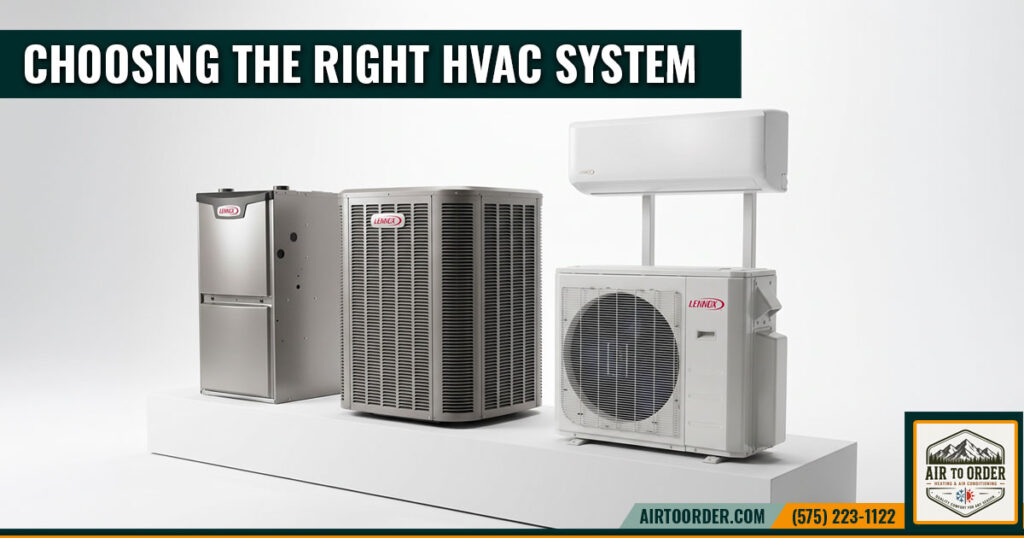
If you live at high elevation in northern New Mexico, your HVAC needs look nothing like a home down in the valley. At elevations between 8,000 and 10,000 feet, you’re dealing with long, cold winters, big overnight temperature swings, thin mountain air, and summers that are short and mild. Choosing the right heating and cooling system up here isn’t about picking whatever’s popular — it’s about picking what actually works at altitude.
Here’s what to think about before you decide.
Heating Takes Priority, But Cooling Still Counts
In most of the country, HVAC decisions are a fairly even balancing act between heating and cooling needs. At this elevation, heating carries more of the load. Winters routinely drop well below freezing, and snow can stick around for months, so your system needs to run hard, and run efficiently, for a long heating season.
That doesn’t mean cooling is an afterthought. Summer days at elevation can still climb into the 80s with intense high-altitude sun, and homes without any cooling can get uncomfortably warm during those stretches. The right system needs to handle both sides well, just with heating capacity as the priority. A high-efficiency furnace or a cold-climate heat pump, paired with adequate cooling for the warmer months, is usually a better fit here than a system built primarily around cooling performance.
Elevation Affects Equipment Performance
Thinner air at high elevation means combustion appliances — furnaces, boilers, some water heaters — burn fuel differently than they would at sea level. Equipment needs to be properly sized and, in many cases, adjusted or de-rated for altitude to run safely and efficiently. This is a step that’s easy for out-of-area contractors to miss, and it’s a big reason to work with someone who installs systems in mountain conditions regularly.
Altitude also affects heat pump performance. Cold-climate heat pumps have come a long way, but their efficiency still drops as outdoor temperatures fall. In a region where single-digit nights aren’t unusual, that’s worth factoring into the decision.
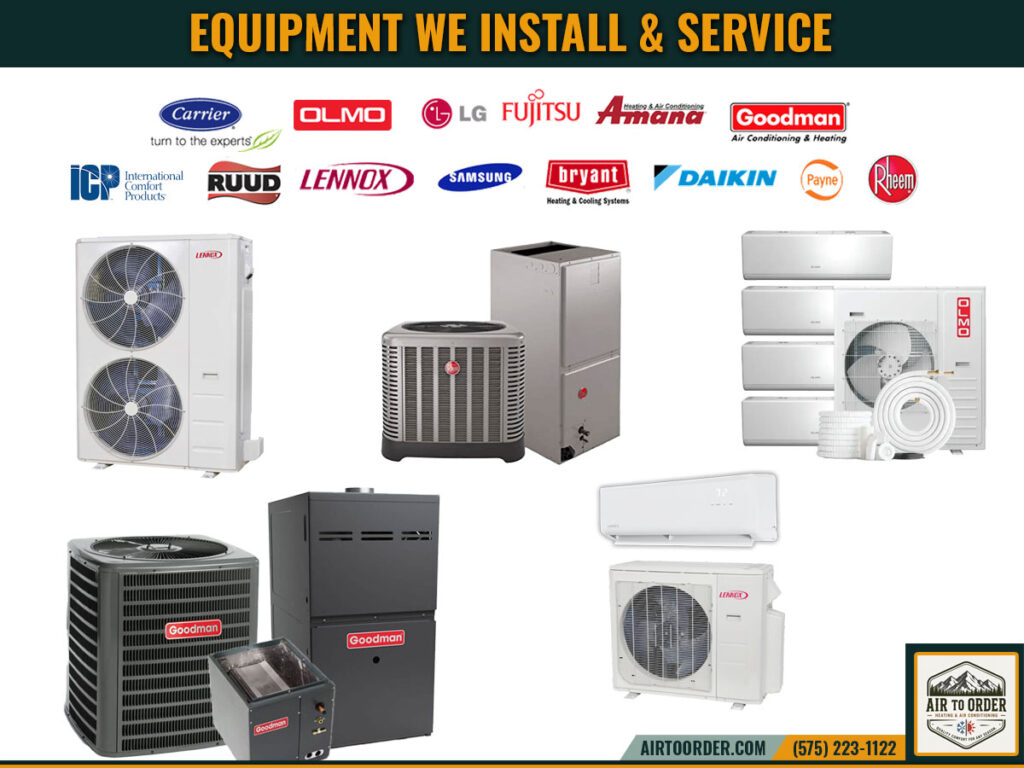
Equipment We Install & Service
No matter which direction you end up going, whether that’s a furnace, a heat pump, or a ductless mini-split, equipment quality and proper installation matter more at elevation than they do anywhere else. Air to Order installs and services trusted brands including Lennox, Carrier, Bryant, Payne, ICP, Rheem, Ruud, Goodman, Amana, Daikin, LG, Samsung, Fujitsu, and Olmo. Whatever system ends up being the right fit for your home, our technicians are trained and experienced across these manufacturers, so you get an honest recommendation, not a sales pitch for whichever brand we happen to carry.
With the equipment side covered, the next decision is what fuel source actually makes sense for your property.
Propane, Electric, or a Hybrid Approach
Many rural New Mexico properties aren’t on natural gas lines, which means propane and electric are the two main options for heating fuel.
- Propane furnaces are a common, reliable choice for full mountain winters and can heat a home quickly even in extreme cold.
- Electric heat pumps offer efficient heating and cooling in one system and have gotten significantly better in cold climates, though performance can dip on the coldest nights.
- Dual-fuel (hybrid) systems pair a heat pump with a propane or electric furnace backup, letting the system lean on the more efficient option most of the year and switch to backup heat when temperatures really drop.
The right call usually comes down to your home’s insulation, your budget, and how the property is used — full-time residence versus a part-time getaway.
Ductwork and Insulation Come First
A well-chosen HVAC system can still underperform in a home with leaky ductwork or gaps in insulation — a common issue in older mountain cabins and homes built in stages over the years. Before sizing a new system, it’s worth having your ductwork and building envelope checked. Sealing leaks and improving insulation often make as much difference in comfort and cost as the equipment itself.
For homes without existing ductwork — think additions, cabins, or garages converted into living space — ductless mini-split systems are worth a look. They heat and cool efficiently room by room without the cost of adding ducts.
Do Mini-Splits and Heat Pumps Work at High Elevation?
Yes — but they need to be sized differently than a sea-level spec sheet would suggest. A mini-split’s refrigerant circuit is sealed, so altitude doesn’t affect what’s happening inside the lines. What it does affect is the air-side heat exchange: the same coil size and blower airflow simply move less heat through thinner mountain air.
That shows up as a real capacity derate. Depending on the manufacturer and model, systems at higher elevations can lose a meaningful chunk of their rated output — sometimes 20% or more compared to sea-level ratings. A unit sized straight off a spec sheet without accounting for this will come up short on the coldest days.
A few things that make the difference:
- Manufacturer-specific derate tables. Mitsubishi, Fujitsu, Daikin, and LG all publish altitude-adjusted capacity data. A properly sized system uses those numbers, not a guess.
- Multi-zone sizing. On systems feeding several indoor units off one outdoor unit, the derate applies across the whole system — which sometimes means stepping up to a larger outdoor unit than you’d need at sea level.
- Cold-climate rated equipment. Elevation and cold winters compound each other. Cold-climate heat pumps and mini-splits are built to hold heating capacity well below freezing, but they’ll still see some additional loss from thinner air on top of that.
Bottom line: mini-splits and heat pump systems absolutely work in high-elevation mountain homes — they’re often a great fit for additions, cabins, and homes without ductwork. The key is having someone size the system for your actual elevation, not a catalog number.
Why Ductless Mini-Splits Are a Strong Fit for Mountain Homes
“Split system” and “mini-split” get used interchangeably, but they’re not quite the same thing. A central split system still has an outdoor condenser and an indoor coil — the indoor coil just ties into ductwork that carries air through the house. A ductless mini-split skips ductwork entirely: each room or zone gets its own indoor head, connected to the outdoor unit by refrigerant lines instead of ducts.
That distinction matters more at elevation than it might seem.
- No duct losses working against you. Older mountain cabins often have ductwork run through unconditioned crawlspaces or attics, leaking and poorly insulated. That bleeds off capacity before conditioned air ever reaches the room — stacking on top of the altitude derate a system is already dealing with. Going ductless avoids that loss entirely.
- Zone-by-zone control. Additions, converted garages, and rooms with different sun exposure or occupancy patterns can each get their own head and thermostat, instead of fighting for balance through one duct system.
- Outdoor unit placement matters more in snow country. The outdoor unit needs to sit elevated on a wall bracket or stand — clear of roof snow-shed lines and drift patterns — rather than set on a ground pad the way it might be at lower elevation. A buried or ice-choked outdoor unit is one of the most common, and most avoidable, mountain service calls.
For homes without existing ductwork, or where duct losses are already fighting the system, ductless mini-splits are often the more efficient choice at elevation — not just the more convenient one.
Sizing It Right
Bigger isn’t better. An oversized furnace or heat pump will short-cycle — turning on and off frequently — which wastes energy, wears out equipment faster, and leaves rooms unevenly heated. Correct sizing depends on your home’s square footage, insulation, window exposure, and elevation. This is where a proper load calculation, not a rule of thumb, makes the difference between a system that works and one that just runs.
Plan for Altitude-Related Maintenance
High-elevation, high-desert conditions bring their own wear and tear — dust, wide temperature swings, and heavy use during long winters. Regular maintenance (filter changes, combustion checks on fuel-burning equipment, and seasonal tune-ups) keeps systems running safely and helps them last through New Mexico’s demanding mountain winters.
The Bottom Line
There’s no single “best” HVAC system for every home — but there is a best system for your home, once you factor in elevation, climate, fuel access, and how the property is insulated and used. A proper in-home evaluation beats guesswork every time.
Not sure what’s right for your home? Air to Order is a veteran-owned, family-operated HVAC company based in Angel Fire, serving Taos, Mora, Cimarron, and the surrounding mountain communities. We’ll walk your home, talk through your options honestly, and help you choose a system built for where you actually live — not a one-size-fits-all recommendation.
📞 Call (575) 223-1122 or schedule a service call to get started.