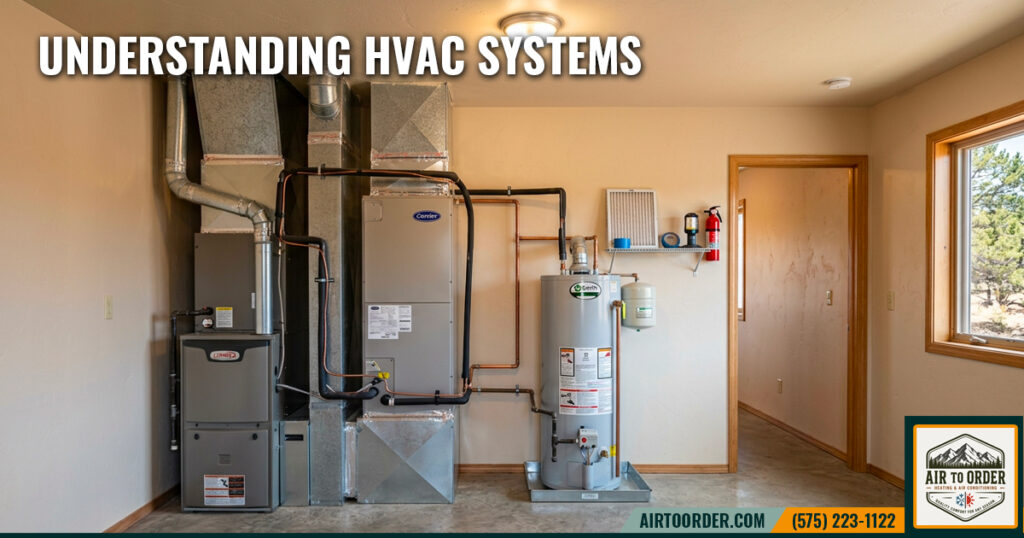
If you own a home in Angel Fire, Taos, Mora, Cimarron or anywhere else in northern New Mexico, your HVAC system is doing more work than it would at sea level. Thinner air, bigger temperature swings, and long, cold winters all put extra strain on the equipment that keeps your home comfortable. Understanding how that equipment actually works makes it a lot easier to spot problems early, make smart decisions about repairs or upgrades, and avoid paying for things you don’t need.
Here’s a straightforward look at what HVAC systems are, how they’re built, and how the pieces work together.
What HVAC Actually Means
HVAC stands for Heating, Ventilation, and Air Conditioning. It’s the umbrella term for everything in your home that heats the air, cools the air, moves the air around, and keeps it clean along the way. Most people just think of it as “the furnace” or “the AC,” but a full system is really a set of components working as a team.
The Core Components
Furnace or heat source. This is what generates warmth. In most homes up here, that’s a gas furnace, though some properties run on heat pumps, boilers, or electric resistance heat. Whatever the source, its job is the same: create heat that gets distributed through the rest of the system.
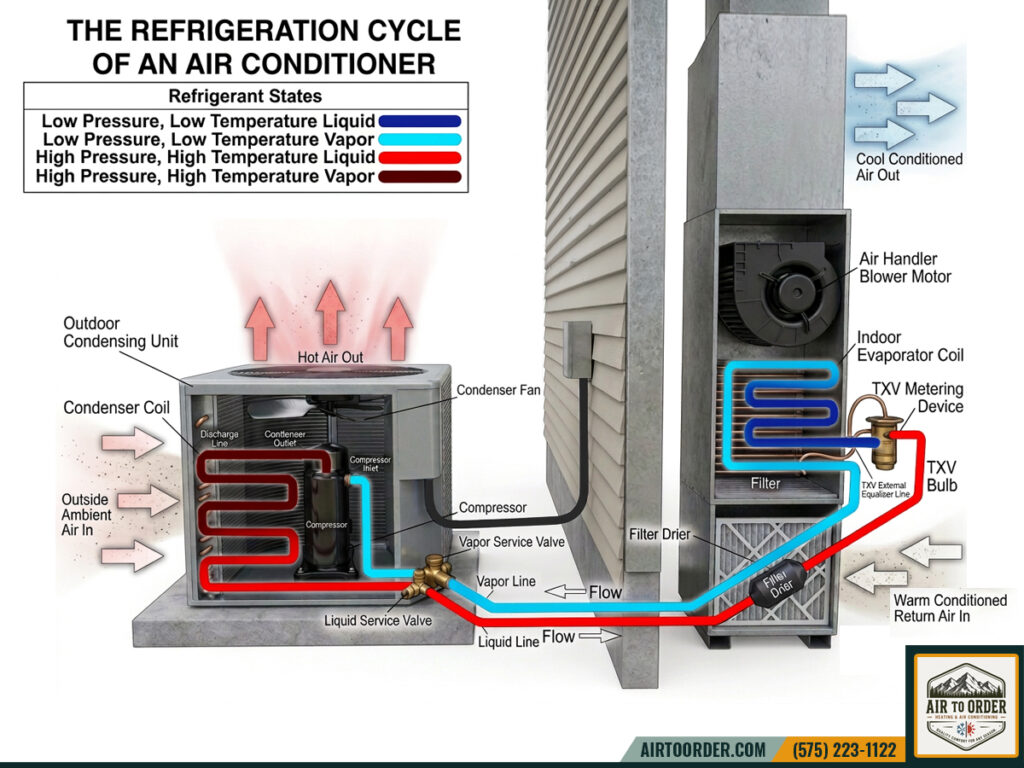
Air conditioner or heat pump. This removes heat and humidity from indoor air during warmer months. A heat pump can do double duty — it can also pull heat from outside air and bring it indoors, which is why some homes use one unit for both heating and cooling.
Air handler and blower. This is the component that physically moves air through your home. It pulls air in, pushes it across the heating or cooling elements, and sends it back out through the ductwork.
Ductwork and vents. These are the pathways air travels through to reach every room, and the openings where it enters and exits. Leaky, poorly sealed, or undersized ductwork is one of the most common — and most overlooked — reasons a system runs constantly but never quite keeps up.
Thermostat. The control center. It reads the temperature in your home and tells the rest of the system when to turn on, shut off, or switch between heating and cooling.
Refrigerant lines. In systems with air conditioning or a heat pump, refrigerant is the fluid that actually carries heat from one place to another — absorbing it indoors and releasing it outdoors, or the reverse, depending on the season.
Filters. These trap dust, pollen, and other particles before they circulate through your home. A clogged filter is a small problem that quickly turns into a big one, since it forces the whole system to work harder just to move air.
How It All Works Together
In heating mode, the furnace or heat pump generates warmth, the blower pushes it through the ductwork, and it exits through vents into each room. As the air cools back down, it’s pulled back into the return vents to be reheated and recirculated.
Cooling works the same way in reverse: the air conditioner or heat pump removes heat and moisture from indoor air, the blower circulates the cooled air through the home, and warm air is continually drawn back in to be treated again.
The thermostat ties it all together, cycling the system on and off to hold whatever temperature you’ve set — which is also why a thermostat that’s miscalibrated or in the wrong location can throw off comfort in the whole house.
Common System Types in This Area
Not every home up here has the same setup, and that’s normal given the mix of older mountain properties and newer construction:
Central split systems — a furnace and air conditioner working together, connected by ductwork. The most common setup in homes built with existing duct systems.
Ductless mini-splits — individual wall-mounted units that heat and cool specific rooms or zones without ductwork. A popular option for additions, cabins, or homes where running ducts isn’t practical.
Heat pumps — efficient for moderate temperature swings, though performance can drop in extreme cold, which matters at our elevation.
Why This Matters for You
You don’t need to become an HVAC technician to own a home comfortably. But knowing the basic pieces — what generates heat, what moves the air, what controls it all — makes it a lot easier to describe a problem accurately when you call for service, understand what a technician is telling you, and make informed decisions when it’s time to repair or replace a system instead of just taking someone’s word for it.
If something about your system doesn’t add up — a room that’s never comfortable, a unit that runs nonstop, or equipment you inherited with the house and know nothing about — that’s exactly the kind of thing worth having a second set of eyes on.
Not sure what kind of system you have, or whether it’s running the way it should?
Call (575) 223-1122 or book a service call. Air to Order provides HVAC services throughout Angel Fire, Taos, Mora, Cimarron and surrounding Northern New Mexico communities.